
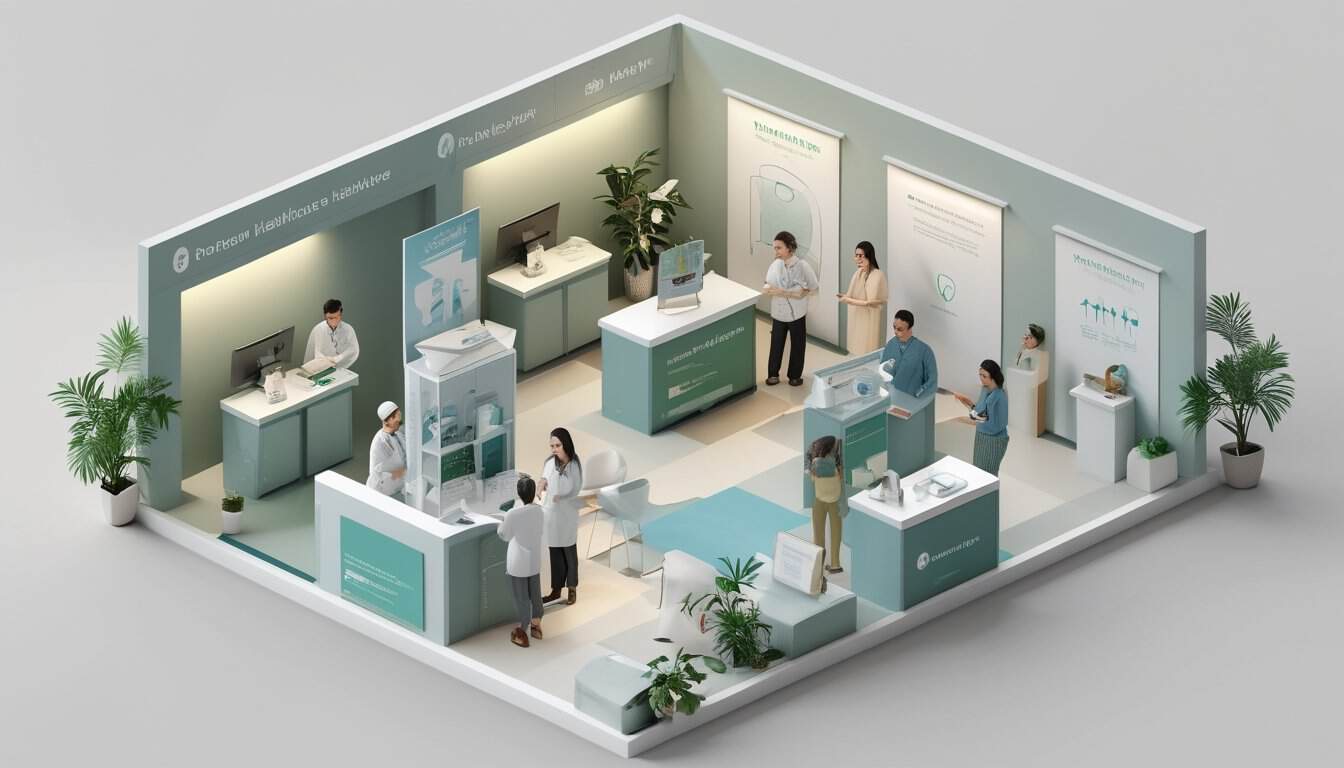
What Medical Booth Design Should Achieve
A good medical booth design is not just about looking neat on the show floor. It needs to help visitors understand the healthcare message fast, feel safe, and know where to go next. In simple terms, the booth should support trust, clarity, and smooth movement from first glance to final conversation.
Checklist for this section: make the purpose obvious, keep the layout easy to read, and ensure every visual element supports a professional healthcare image. When a booth does these basics well, it becomes much easier for the team to start meaningful conversations with visitors. Related source: https://upstageexpo.com/services/medical-healthcare.
Planning the Layout and Visitor Flow
Layout is one of the most important parts of medical booth design because people usually decide within seconds whether to walk in or keep moving. The space should feel open enough to invite visitors, but structured enough to guide them naturally from entrance to display to discussion area.
Checklist for this section: place key information at eye level, leave enough walking space, and avoid clutter at the front of the booth. If there are product samples, demo stations, or consultation spots, each one should have a clear role so visitors do not feel lost.
Using Colours, Lighting, and Branding Well
Colours and lighting can change how a medical booth design is perceived. In healthcare settings, clean tones, balanced contrast, and calm lighting usually work well because they support the feeling of hygiene and reliability.
Checklist for this section: use a consistent colour palette, keep lighting bright but comfortable, and make the logo or brand message easy to spot from a distance. Small design choices, like matching furniture and signage colours, can make the whole booth feel more put together.
Choosing Displays, Signage, and Interactive Elements
Displays should do more than decorate the space. They need to explain what the organisation offers in a way that is quick to scan and simple to remember. In a busy exhibition hall, clear signage and well-organised visuals help visitors understand the booth without having to ask too many questions.
Checklist for this section: keep headlines short, use readable fonts, and focus each display on one key message. If interactive elements are included, they should be easy to use and directly tied to the booth’s purpose, such as showing a service process, demonstrating a device, or collecting visitor interest.
Keeping Hygiene, Comfort, and Accessibility in Mind
Healthcare-related spaces are expected to look clean and well managed, so hygiene should be part of the design plan from the beginning. Comfortable seating, tidy surfaces, and easy-to-clean materials all help the booth feel more credible. Accessibility matters too, because a well-designed booth should be welcoming to different visitors, including those with mobility needs.
Checklist for this section: choose wipeable materials, keep cables and clutter hidden, and provide enough room for easy movement. Simple additions such as clear pathways, comfortable chairs, and accessible counter heights can make the booth better for both staff and visitors.
Reviewing Common Mistakes Before the Event
Even strong medical booth design plans can go wrong if the basics are missed during setup. Common mistakes include overcrowding the space, using too much text, poor lighting, weak signage, and forgetting practical details like storage or power access. These issues can make the booth feel confusing or less professional than intended.
Checklist for this section: test the setup early, walk through the booth as a visitor would, and confirm that all key messages are visible. It also helps to check whether the team has enough space to speak comfortably, manage materials, and keep the booth looking organised throughout the event.
